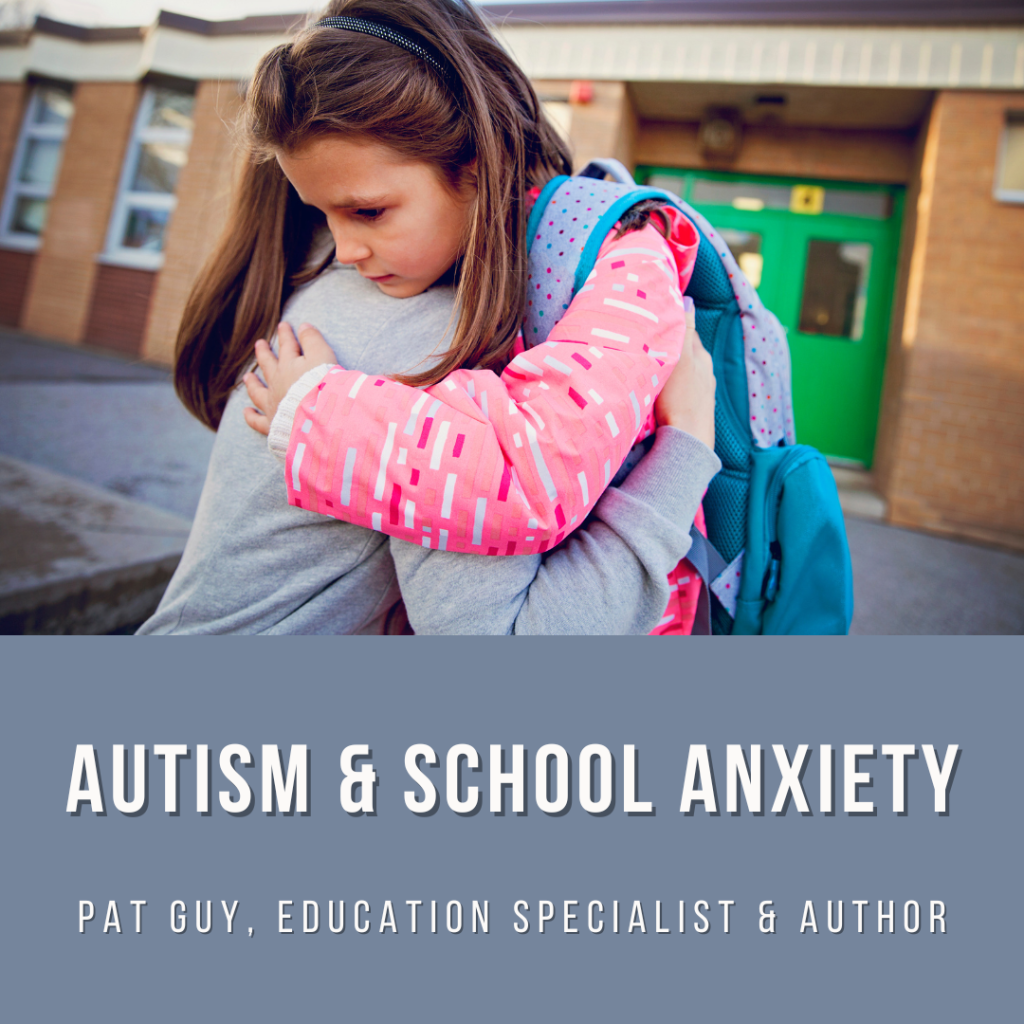
Feelings of anxiety for ASD pupils are often linked to their environment. Ten of the reasons why pupils may feel anxious in school are listed below: most of these anxieties could be eased by simple adjustments.
- Sensory issues. Smells in the dining room may make the pupil feel nauseous, school uniforms feel scratchy and uncomfortable, and noisy, crowded corridors are overwhelming.
Solution = Provide alternative, smaller areas for pupils to eat their lunch, perhaps outside; relax uniform rules; stagger lesson times or have an agreement that pupils can leave lessons a few minutes before their peers.
2. Exhaustion. Schools have long days. Pupils with autism will have to concentrate socially and academically all day: very little they do at school will be achieved on automatic pilot.
Solution = A recognition by adults of the energy these pupils must expend in order to cope with the neurotypical world. Reduce homework to give more down time in the evening and at weekends.
3. The child’s behaviour is misunderstood by adults. For example, they may be accused of not listening, when they actually have a language processing difficulty.
Solution = A good understanding of the individual’s profile, an open mind, Quality First Teaching and appropriate differentiation.
4. School rules. When these are based on compliance, rather than logic, the pupil may be punished for breaking a rule they haven’t fully understood.
Solution = Rules and the reasoning behind them must be clarified and carefully explained, even when this seems obvious to the adult.
5. Social difficulties. The pupil will want to fit in and not judged to be different. They won’t ask for help, fearing this may draw attention to themselves.
Solution = All adults to be proactive and discreet in providing support.
6. Perfectionism. The pupil will want to do their best, but may not know how much work to do. What is enough revision? When is homework complete?
Solution = Make expectations of work crystal clear, with all instructions simple and explicit.
7. Misunderstandings. Communication difficulties may occur with adults as well as the pupil’s peers. For example, correcting an adult will be considered insolent behaviour, but the pupil may simply be trying to be helpful.
Solution = In-service training to focus on an appreciation of the presentation and behaviour of neurodivergent pupils.
8. Opportunities for relaxation that are anything but. Break and lunch time may seem more exhausting than lessons to the pupil because of social and sensory demands.
Solution = Provide safe, quiet places for pupils to use during breaks. Run lunchtime clubs linked to their interests.
9. Co-morbidity with other learning difficulties. For example, the handwriting of pupils who experience dyspraxia in addition to autism, may be slow and laborious because of their poor motor control. Their work rate will be far slower than that of their peers.
Solution = Increased use of IT in the classroom.
10. Unpredictability. Subject lessons, teaching staff, classrooms and lesson timings may all be subject to last minute changes, making the pupil feel anxious about what is coming next.
Solution = Be aware of the effect of unanticipated changes on these pupils, and prepare them as much as possible. Use visual timetables.
 Pat Guy Education Specialist & Author