Challenge 1 = Losing possessions
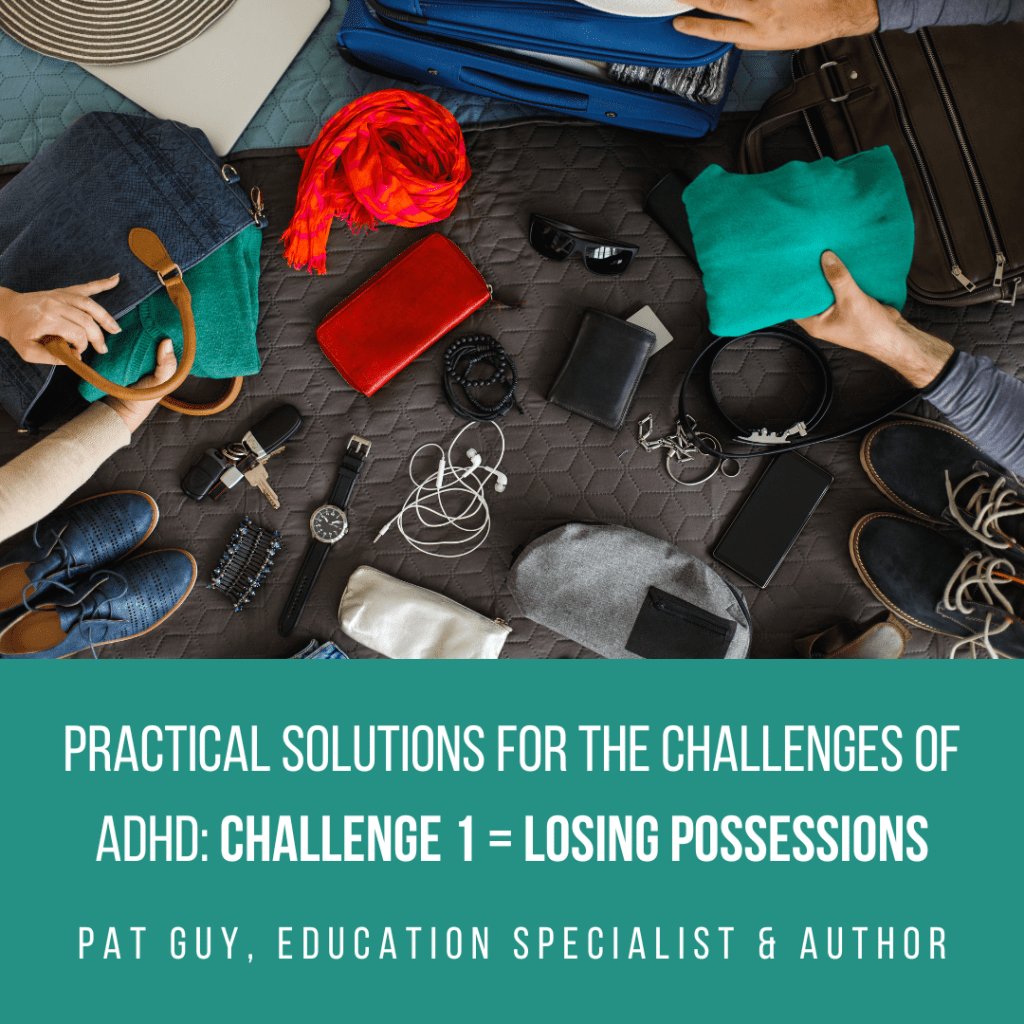
ADHD is a biological disorder involving an impairment in executive functioning. This impairment affects an individual’s skills of, for example: organisation, planning, concentration, time-management, self-regulation, memory and motivation.
Consistently misplacing possessions is one result of poor executive functioning. The individual with ADHD will have poor concentration, they may have been distracted when they put the item down, and a weak memory will leave them unable to automatically recall where they left it. The lost item may be expensive, of sentimental value or essential for the individual’s work: this will make no difference to the individual’s ability to keep it safe.
10 strategies that might assist: –
- Individuals with ADHD tend to only see what is in their line of vision. It is very much a question of out of sight, out of mind, so it will help if important objects are stored at eye level or within clear sight. Use brightly coloured cases for glasses and phones, put reflective tape on the TV remote and attach keys to a large, unusual key chain to increase their visibility. Group the same items together. All medicines in the same cabinet. All house keys in a pot or on a hook by the front door. All make up in a transparent zipper case to keep it separate from other items in your handbag.
2. If you have responsibility for keys at work, keep them on a lanyard around your neck or on a keyring clipped to your belt: when items are attached to your body, you’ll be unable to misplace.
3. Have at least two sets of house keys. Leave spares for emergencies with a family member or friend.
4. Keep to routines. Always park your car in the same part of the car park, for example, first row on the third floor, as close as possible to the lift. Tying a piece of coloured ribbon to the car’s antenna may make it easier to spot from a distance.
5. Store things in the place they are likely to be used, for example, sunglasses in the glove box of the car, stationery in your desk, tools in a tool box.
6. Buy the same make, style and colour of socks and gloves, then when you lose one, you will still be able to make a pair.
7. Create your own structure. Always return your house key to your purse or wallet after use. Always return your car keys to the front pocket of your handbag. If you routinely put objects in the same place, hopefully you will do that automatically even when distracted, or at least you’ll know where to start looking for them.
8. Think about when and where your usual errors occur and make a determined effort to pay close attention in those situations. For example, if you have a tendency to forget your keys in the morning, triple-check that you have them with you. As you get ready for work, check to ensure that you still have the keys. Check again immediately before leaving, then again after you’ve put on your coat.
9. For expensive possessions, tracking devices can be useful, for example, AirTags or Tile. When you misplace an object, the tracker will play sounds via an app to help you to locate it. Apps such as ‘Remember the milk’ or ‘Todoist’ are helpful as supportive memory aids.
10. Ask sympathetic neurotypical friends for help. Before you leave work or a meeting, they can check you have picked up all of your belongings, ask if you have your keys or whether you have put your glasses in your bag.
 Pat Guy Education Specialist & Author