Early Experience and Brain Development

All animals adapt in order to survive, fine tuning their brains according to the input they receive from their environment. The more sophisticated the animal, the more adaptable their brain. 

At birth the human brain already has the majority of the information messengers that it will ever have. The young child’s brain has twice as many connections between the information messengers as an adult’s brain. These extra connections make their brains exceptionally responsive to input. For example, hearing speech stimulates connections in language-related areas of the brain, reinforcing and strengthening that specific area. Every time the child hears more speech, the connections will be further strengthened and reinforced. 

The brain will judge connections that are not used regularly to be unnecessary and delete them. This process of consolidating and pruning enables the brain to achieve development that is perfectly in tune with the individual child’s personal situation.

There are key periods in early childhood when the brain is most affected by experience, be it positive or negative, and this receptiveness can put the brain development of young children living in stressful situations at risk. Positive experiences throughout childhood help to build healthy brains, but negative experiences will have the reverse effect. If a young child is in a constant state of high alert, ready for aggressive or unpredictable behaviour from their familiar adults, they will exist in a constant state of anxiety and fear. Fear will change the way the child’s brain works. For example, when in a state of fear, the child can only use the primitive parts of their brain; they will react to situations instinctively and without thought: fighting or hitting out, absconding or simply freezing with terror. Such defensive mechanisms will help to keep them safe in stressful environments, but will be counterproductive in safer situations, such as school. 

Supporting children who have experienced early stress is difficult, but the situation is not hopeless.

  • It is important that parents and carers are attuned and responsive to their baby’s needs and provide appropriate care: recognising and responding when their baby is hungry, unwell or in need of physical affection and comfort.
  • Teachers should ask what has happened to the child, rather than what is wrong with the child. 
  • Human brains have the potential to change and grow: caring relationships and sympathetic support can reduce the effects of early negative experiences, helping a child’s brain develop in a healthy way. 
  • Resilience can be taught at any age.
  • Frightened children react without thought, so talking may not always help. To reduce panic and anxiety, try to be predictable and reliable in your response, involve the child in physical activity and increase their favourite sensory input, for example, listening to music, playing on a swing or walking round the playground.
Old Habits Die Hard

Neurodiverse pupils often develop their own strategies for coping at school. However, such defence mechanisms are not always useful in the long term.

  • The pupil may prefer to be seen as the class clown rather than class dunce. 
    • The older child may choose to save face by becoming the school comic or rebel. This can make life difficult for other pupils as well as their teachers, as the child may ridicule their peers for working hard or joining in.
  • The pupil may develop a ‘chip on their shoulder’.
    • If the child receives regular criticism, they may become hypersensitive to what they feel to be negative comments. They may be aggressively defensive, ready to argue rather than listen to feedback that could support their progress.
  • They manage by becoming perfectionists.
    • The pupil may work themselves into a state of exhaustion in order to keep up with their peers. 
  • They may cultivate a ‘take me or leave me’ persona.
    • The pupil may have what appears to be a relaxed attitude, showing no desire to adapt their behaviour or increase their effort. ‘This is what I’m like: take me or leave me.’ 
  • The child may develop helplessness.
    • This is a strategy more more commonly seen amongst girls. The pupil will acquiesce by saying: ‘Oh, I can’t do this’, or ‘I’ve always been pathetic at this sort of thing’, hoping that someone else will step forward and seize the opportunity offered.
  • They may take a domineering stance.
    • Domination tends to be a tactic used by boys. If the pupil feels that they are in control, they can set the agenda, play to their strengths and avoid anyone uncovering any perceived weaknesses.
  • The pupil may blame others.
    • The pupil may blame others for their errors; shifting the blame in the hope that their shortcoming will be less obvious.
  • Or they simply give up.
    • Some of the children may get so used to failure, they give up and settle for a lifetime of underachievement.

Unfortunately, strategies developed in childhood can easily become lifetime habits, whether useful or not. Few of these strategies are helpful in adult life: being dismissive of others, arguing for argument’s sake, point scoring, appearing disinterested or overly critical are not endearing personal characteristics.

Proverbs to support resilience

(Resilience refers to an individual’s ability to recover quickly from setbacks)

  1. However long the night, the dawn will break – African proverb. 

Remember that uncomfortable times do not last for ever. Every day brings a fresh start and new opportunities.

2. Only those who do nothing, never make a mistake – African proverb.

Everyone makes mistakes. Making mistakes is an essential part of learning. Reflect on what went right, and learn from what went wrong, then start again. 

3. Enough is as good as a feast. 

Keep things in perspective: remember that others will be facing circumstances more challenging than your own and be grateful for what you have. 

4. A man is known by the company he keeps.

Spend time with positive, supportive people who are optimistic and will encourage you to keep going through difficult times.

5. The longest journey begins with a single step.

Take a small steps approach to challenges. 

6. Healthy body, healthy mind. 

When you are fit and healthy, it will be easier to cope with difficulties: exercise regularly, follow a sensible diet, spend time outdoors and keep to a good sleep routine.

7. All work and no play, makes Jack a dull boy. 

Take time to relax and recharge your batteries in order to persist with an activity. 

8. Nothing ventured, nothing gained. 

See difficult situations as challenges, and always look for the silver lining in any problem. 

9. Variety is the spice of life. 

The more varied your skill set, the more the options you will have for moving forward.

10. Time flies when you’re enjoying yourself. 

When you enjoy what you do, you will be more motivated to persist in the face of challenge. 

11. Don’t put all your eggs in one basket. 

Be flexible in your thinking: there will always be several different ways to tackle problems. 

12. Laughter is the best medicine.  

A sense of humour will help you to deal with every situation. 

Olivia and the Proverbs – Illustrations

The ‘Olivia and the Proverbs’ books comprise of short stories designed to teach children the meanings of English proverbs in a fun way. Each story focuses on one proverb. The stories are beautifully illustrated by Alessandra Covino. 

I wanted to share some of these illustrations with you, along with their matching proverb…

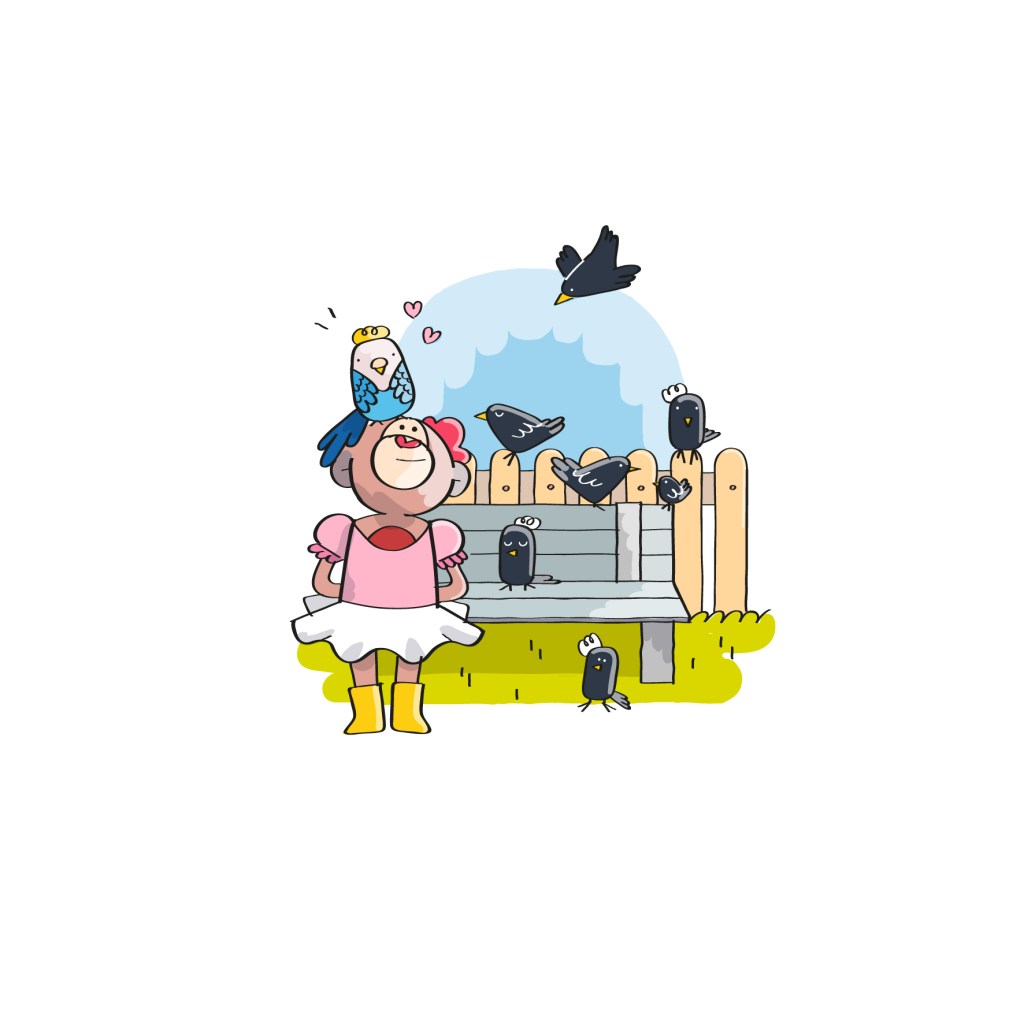
Birds of a feather, flock together.
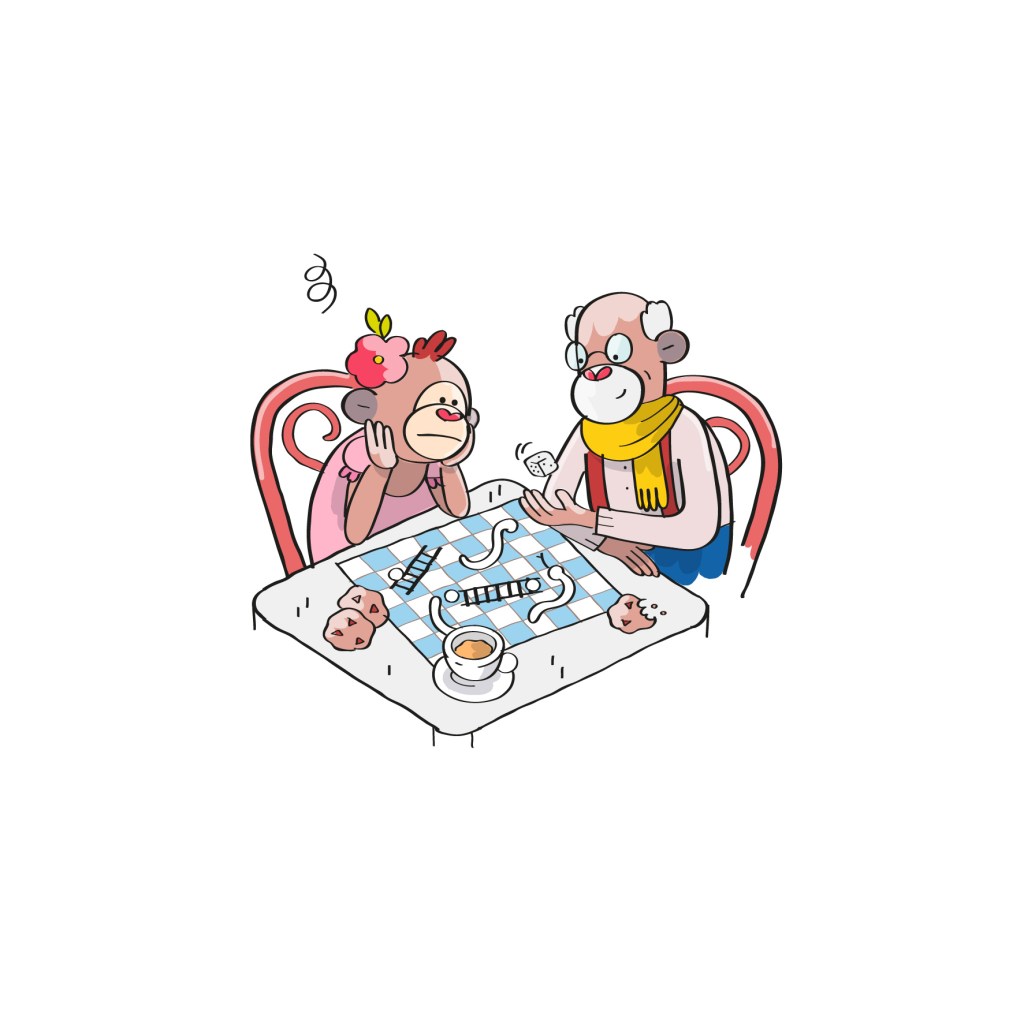
Patience is a virtue.
Silence is golden

.

Absence makes the heart grow fonder.
Let sleeping dogs lie.
Never judge a book by its cover.

I never tire of seeing the beautiful way Alessandra brings my stories to life through her illustrations.

All of my ‘Olivia and the Proverbs’ books are available on Amazon, click on their names below:

Olivia and the Proverbs

Olivia and the Proverbs 2

Olivia the Architect

– Pat

Competition Entries…

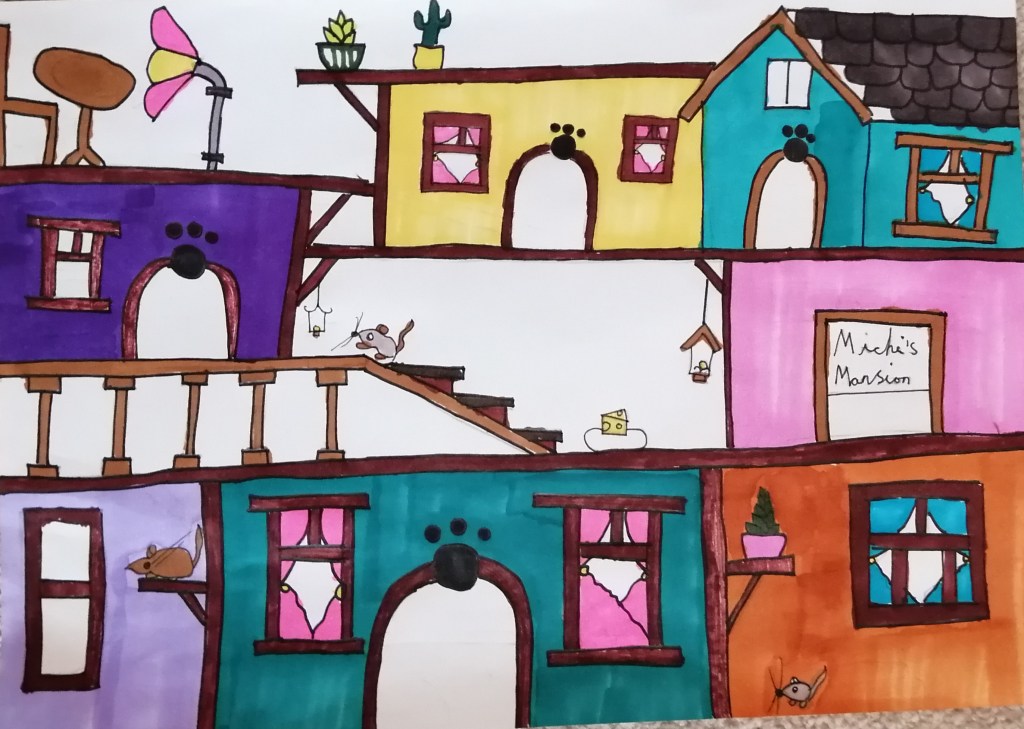
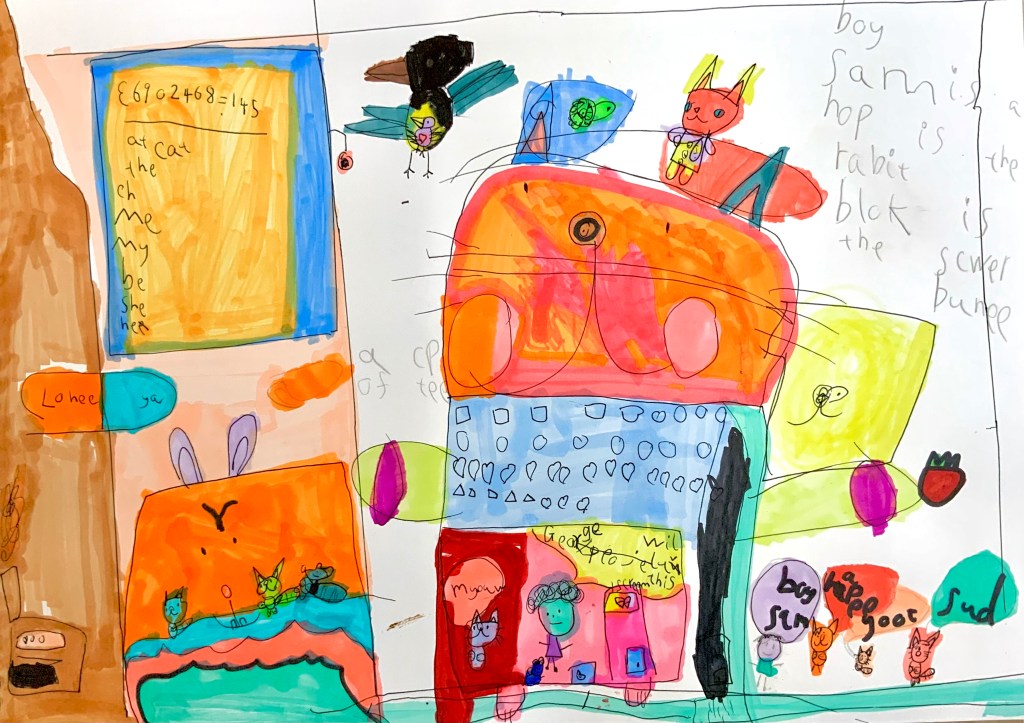
I just had to share with you some of the incredible entries I had for my ‘Olivia the Architect’ creative competition. To enter I asked children to design a house for their favourite soft toy or pet…I had over 150 entries! This just blew me away! I had such fun looking through them all and picking my favourites, but it was a tough job as they were all so brilliant and hugely inventive.

All of the winners have now been notified and their prizes sent out (see previous post) – but here is a small example of some of the wonderfully bonkers entries I received. I hope they’ll make you smile as much as they did me! 

I’d love to know which is your favourite?

-Pat

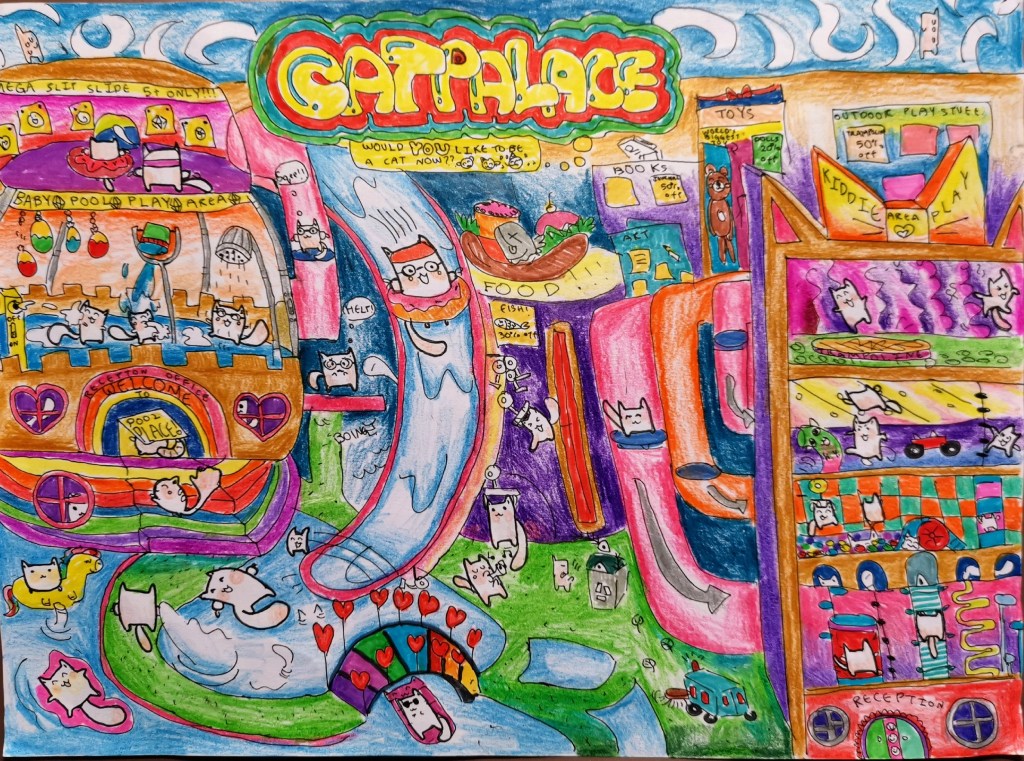
A PALACE FOR CATS – AMELIA
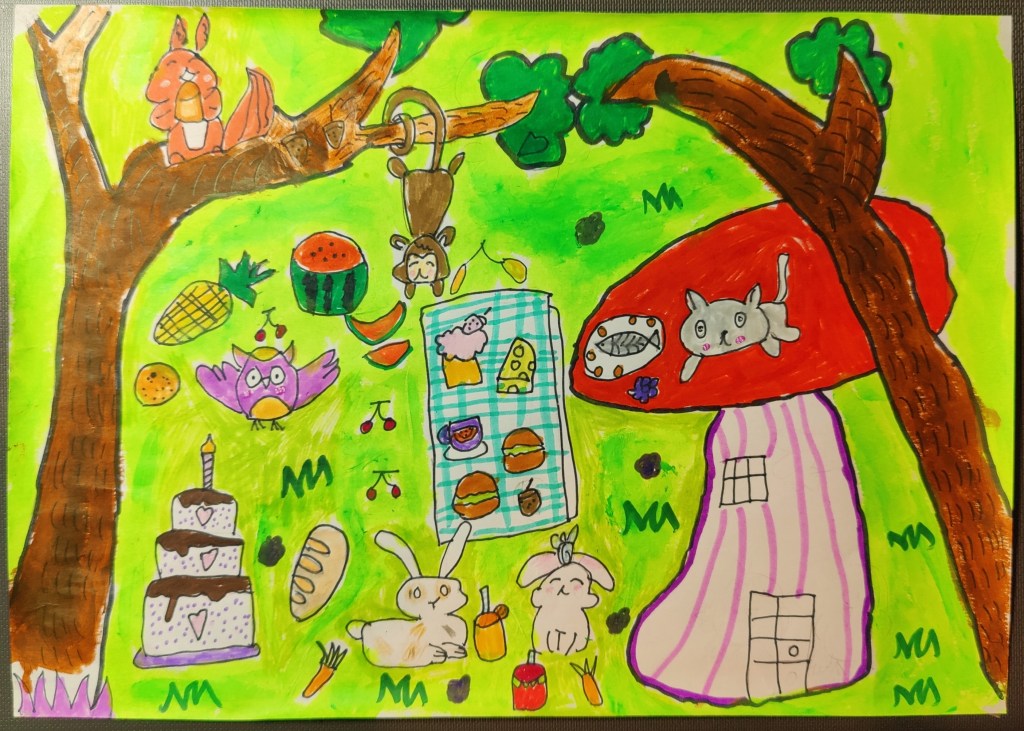
CATHLEEN – A drawing of a house for a lots of cuddling animals: a mushroom house with a cat having her fish meal on top. 
Samuel, aged 11, has loved creating his design for a treehouse to reflect the interests of a red panda. Please find attached Samuel’s picture along with a key to describe the different room ideas. Samuel had great fun creating his picture
Samuel’s Key
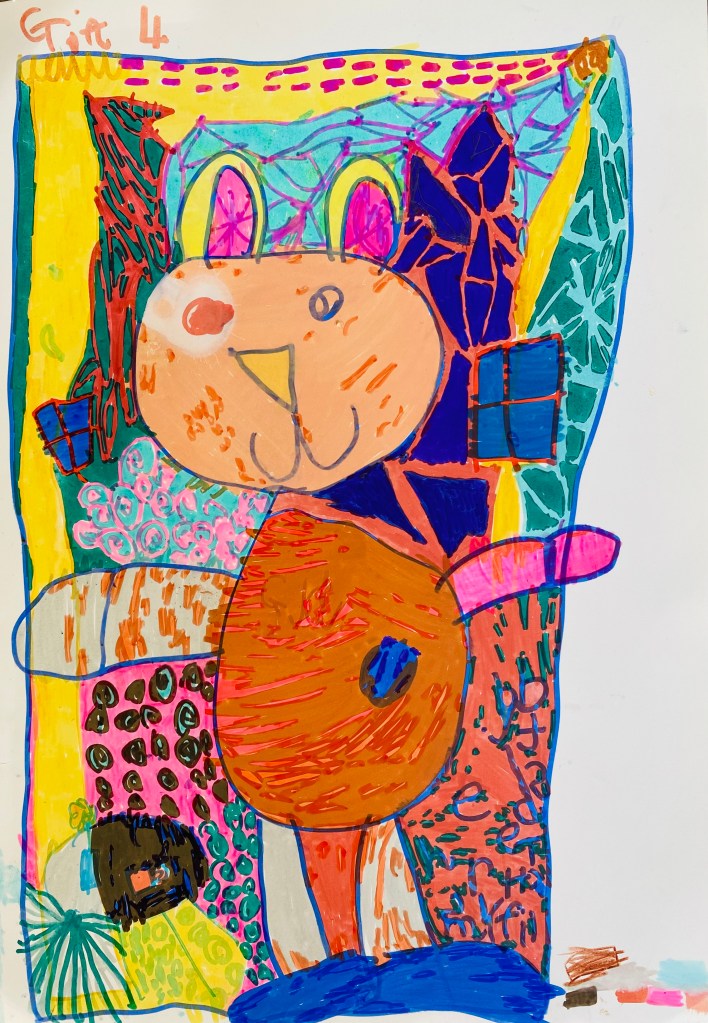
 Ela drew a house of sweets for her teddy bear because teddies like sweets. In the drawing her teddy is finishing to build his house by putting the roof on. 
A MOUSE HOUSE BY EMILY
Romilly has designed a flamingo house with a pond in the ground floor which provides their breakfast, lunch & tea, a balance beam on the second floor so they can practice standing on one leg and an upright fish shaped bed on the top floor as flamingos sleep standing up!!! The decor is pink to reflect their personality.
Gia has focused on interior on the interior of her house. There are yellow curtains to cover two windows. Gia says that it’s dark outside, therefore, her windows are of dark blue colour. There is a little table on the left hand side, near teddy’s leg with a red mug – for teddy to drink his tea. And a spider who sits on one of table’s legs. At the very top there are pink thick dotted lines – she says it’s the light – her teddy has switched on the light as it’s dark outside.
Meena – A cat house.
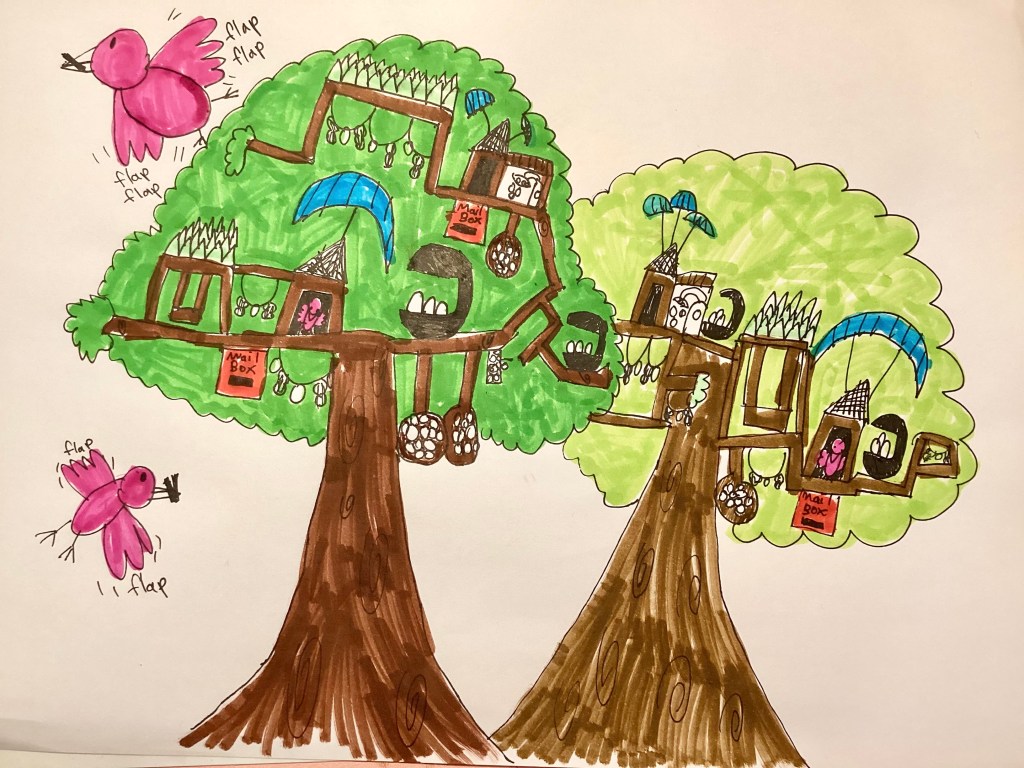
Adeline – Tree houses for birds with below interesting features:
 
– Rocking chairs for the eggs
– Nests with umbrellas 
– Nuts buntings 
– Bird showers
– Bird swings
– Bird feeders
– Mail box for each nest
Christian designed a house for an owl.
Leon drew a lion house.
Barnaby – This is a house for my cat that you can carry her around in and she stays happy.
Fatima designed a koala play house – it is a house that runs off of solar energy and keeps the koalas entertained during the summer.

And the WINNER is…

I’m thrilled to be able to announce the winners and runners up for my ‘Olivia the Architect’ creative competition. I had a whopping 150 entries! It was very hard to pick the winners as I had so many brilliantly imaginative entries – so a huge thank you to all who entered. It was so difficult to choose in fact that I decided to choose another three from each age group as runners up and I will send them each a £5 WHSmiths voucher.

Please scroll down to see if you’ve won!

Winners

Zoe Briand – Lemur.

James Crossland – Pig.

Samuel Debenham – Red Panda.

Fatima Haniya – Koala.

Adeline He – Bird.

Daniel Jones – Stegosaurus.

Amelia Kan – Cat.

Christian Swinn – Owl.

Gia Teddis-Remeike – Teddy.

Runners up

Neve Blaydes – Dog.

Leon Conor – Lion.

Meena Diar – Cat.

Sienna Grant – Dog.

Harriet McLean – Otter.

Bella-Rose Patel – Otter.

Benjamin Resta – Owl. 

Armani Switlyk – Dolphin.

Alfred Thornton-Firkin – Cat

CONGRATULATIONS to everyone who won and came runner up! Your prizes will be with you within a few days.

– Pat Guy

“People with dyslexia have skills that we need, says GCHQ”. 

(GCHQ – the United Kingdom’s top level security agency)

The value of neuro-divergent individuals’ thinking processes is being increasingly recognised. 

How to help your dyslexic child become the next 007 or more.

  1. Get a diagnosis.

Dyslexia involves thinking differently, rather than having a disability. A diagnosis will give the child an insight into their strengths and weaknesses, an understanding of how dyslexia affects them and how their brain operates. Unidentified dyslexia can cause low self-esteem in both children and adults. 

2. Use technology.

Technology is improving all the time. Seek out useful aids and apps that work for the child. For example, rather than reading material, use YouTube videos, podcasts or text to speech apps. 

3. Mentors are useful.

One person taking an interest in a child can make all the difference: someone who believes in them, encourages them and has their back.

4. Find out what the child enjoys and play to their strengths. 

‘Find out what dyslexic kids are interested in, what they’re passionate about. And they can be absolutely exceptional in their area of passion.’

(Richard Branson – Entrepreneur)

Focus on developing the dyslexic child’s hobbies and interests. When they’re absorbed in a hobby, it is easy for them to work hard. Successful people always focus on what they can do rather than what they can’t. Dyslexics may have limited success at school, but life after school comes with choice and innumerable possibilities.  Many dyslexics enjoy visual and spatial strengths and gravitate towards creative careers. Dyslexic architects – Norman Foster, (The Gherkin) and Richard Rogers, (the Millennium Dome). Dyslexic artists – Pablo Picasso and Andy Warhol. Dyslexic fashion designers – Paul Smith and Tommy Hilfiger. Other dyslexics have good oral skills and are excellent story tellers. Dyslexic poet Benjamin Zephaniah couldn’t write, but could tell stories: his poetry is to be spoken rather than read. Dyslexic comedian Eddie Izzard tells stories, he doesn’t adhere to a written script, but ad libs in response to audience feedback.

5. Stay positive – All clouds have silver linings.

Dyslexics develop good people skills.  They know how it feels to be unfairly criticised, appear foolish, be disappointed and frustrated and, as a result, are empathetic and willing to accommodate the needs of others.

Dyslexics understand the value of hard work. These children will have to work harder than their peers to achieve the same results. The experience of working hard is essential for success in the real world. Stamina, grit, perseverance, determination are all characteristics that dyslexics acquire early as a result of the extra effort they are forced to make. 

Team work is another dyslexic forte. Dyslexics appreciate working in a team. They are happy to admit their areas of weakness, to delegate, to give others the opportunity to play to their strengths in order to compensate for the dyslexic individual’s deficiencies. 

Obstacles and challenges develop lateral thinking skills. School can be challenging for children with dyslexia, but thinking of ways around problems forces the individual to work creatively. Technology is increasingly capable of reproducing routine linear activity, so anyone thinking ‘outside the box’ is certain to be sought after. Recent BBC research found that 60% of self-made millionaires are dyslexic. 

The true sign of intelligence is not knowledge, but imagination.’ Albert Einstein.

Specific Learning Difficulties, (SpLDs): the Chinese Menu Model.

Specific Learning Difficulties tend to be separated into a few distinct diagnoses, for example: –

  • Dyslexia – problems with literacy.
  • Dyspraxia – co-ordination difficulties.
  • Dyscalculia – problems with number.
  • Attention Deficit Disorder – concentration and focus weaknesses.
  • Autistic Spectrum Disorder – difficulties with communication and interaction.

Factors to be aware of when children are diagnosed with a SpLD :-

  1. When a child is diagnosed with one SpLD, for example dyslexia, they are likely to experience additional SpLDs, for example, dyscalculia. 
  1. Certain underlying weaknesses are common across most SpLDs, for example, a weak memory: –

Children with SpLDs will experience memory problems for different reasons: –

  • The child may experience problems with concentration and attention. When the teacher is delivering instructions, the child may not be listening because they are distracted by, for example, the noise of other children’s pens or the teacher’s shoes squeaking. 
  • The child may experience a sensory processing issue and not retain information because: the classroom feels too hot, their tie too tight, their jumper too scratchy, their chair too hard or the light too bright.
  • The child cannot understand what the adult is saying and therefore doesn’t remember information. The teacher may be talking too quickly and so meaning is lost, (slow processing), or the child cannot understand the vocabulary the teacher is using and her sentences are too long and complex, (a language weakness)
  1. The diagnosis of the different SpLDs will change over time: –

The child may be diagnosed as having a language problem and delayed speech before starting school. Their poor understanding of the different speech sounds leads to a slower development of literacy in KS1 and they are diagnosed as dyslexic. In KS2, as a result of their literacy difficulties, classroom work is very effortful and the child finds it difficult to focus to the required level, so is diagnosed with an attention deficit. 

  1. The effect of the SpLD on the child will depend on their personality and how much support they receive: – 
  • The child may be very popular, with peers and teachers sympathetic to their needs.
  • They may have alternative talents to boost their self-confidence: sport, drama, dance, music and art, in addition to any individual interests.
  • Their family is supportive and proactive, helping the child to find solutions to the problems they encounter.
  • The child’s school may make excellent provision for pupils with SpLDs, with all staff trained and knowledgeable.
  1. The child’s diagnosis will depend on the professionals involved: – 

Speech and language therapists, occupational therapists, educational psychologists and specialist teachers will all assess the child from a different perspective and may make different diagnoses.

Problems may occur when adults make assumptions about what the child’s SpLD diagnosis means, failing to realise that every child presents differently. 

‘He can’t be dyspraxic; he’s in the school football team.’

‘She’s not attention deficit; she can concentrate when she feels like it.’

‘He’s not dyslexic, just lazy. He can read really well.’

‘Strange that she doesn’t have any problems at school, only at home.’

It may be easier to compare a child’s SpLD with a Chinese meal, in which smaller portions of different types of food make up the whole. For example: –

Child ‘A’ may have: a poor working memory, slow processing, be excellent at Drama and Maths, prefers to word process their work, panics when asked to read aloud, is very disorganised and has social interaction difficulties = Medium portions of egg fried rice, sweet and sour spare ribs and dumplings; small portions of prawn crackers and crispy seaweed, but a large portion of chicken chow mein.

Child ‘B’ has slow processing, a reasonable working memory, is very popular, doesn’t know her times tables and cannot tell the time, but can read Music, enjoys Spanish and History, but has untidy presentation = Medium portion of egg fried rice; small portions of noodles, dumplings, sweet and sour sauce and crispy seaweed, with supersized portions of beef chop suey and prawn crackers.

Key point – All children are individual.

Children and Sensory Overload

Sensory processing refers to the ability to register information through our senses, (sound, sight, taste and so on), to filter the information we receive and to make appropriate responses.

Most individuals are able to sort such information effectively and will only take on-board anything relevant. However, some children are over sensitive to stimuli, experience a difficulty filtering the input and quickly become overloaded. They may have an extreme reaction to the flood of sensory information they receive: light hurts their eyes because it’s too bright; their tie feels so tight, they think they’re being choked; the food they’re offered looks sloppy and makes them gag; the smell in the changing rooms is so overpowering, they think they’ll faint. The child’s reaction to these strong feelings may be extreme: – 

  • If they exhibit a fight response, they become irritable, challenge others, hit out, shout or use inappropriate language.
  • A freeze response will include constantly checking everything, being uncommunicative, appearing tense and ready to bolt.
  • A flee response includes running away, feeling ill and insisting they must go home or devising increasingly desperate avoidance strategies.

While everyone will be able to recall moments of sheer panic when they have behaved like this, perhaps when facing a dental or hospital appointment, job interview or giving a presentation to a large group; as adults we are able to rationalise our feelings and control our anxiety. Children do not have the maturity to be able to do this. It is exhausting for the child to be continually on such a high level of alert, just waiting for an ear-splitting noise, to be blinded by bright lights or nauseated by an overpowering smell. They will have little headroom left for any other activity and, unfortunately, this will include learning. 

The first approach to dealing with sensory overload is to try to avoid it: –

  • Identify any triggers for the child, for example, hot, noisy, brightly lit shops at busy times of the day: try to shop on line or at quieter times.
  • Some children are hypersensitive to smell, so avoid using heady perfumes, scented hair products and strong-smelling washing powder.
  • Learn to recognise the warning signs of imminent sensory overload: the child may begin to behave in certain, predictable ways. When you notice this happening, remove as much sensory input as possible and take child to a quiet place where they can calm down: a tent in their room, a swing in the garden, a favourite tree to climb into. Provide soothing activities, perhaps drawing, colouring, listening to music or a story CD, and allow them plenty of time to relax.
  • Provide regular sensory breaks during the day to help the child to self-calm. Repetitive physical movement, for example, bouncing on a trampoline or kicking a ball against a wall can be particularly helpful.
  • The physical action of chewing soothes and helps with self-regulation: use chewie toys or chewing gum. 
  • Teach calming breathing techniques and practise them daily. 
  • Ensure the child has adequate water, food and sleep. Even mild feelings of hunger, tiredness and thirst will affect their ability to cope.

A second approach would be to make accommodations: –

  • Try to discover why certain articles of clothing bother the child. Solutions might include: fleece hoodies to cut down on noise and visual input, seamless bamboo socks and loose-fitting jogging bottoms for comfort, labels removed to reduce irritation, wearing slippers or gumboots rather than having bare feet when it is cold.
  • Use ear defenders, noise cancelling headphones or ear plugs to help with loud or unpleasant noise, such as vacuum cleaners, busy playtimes, fire alarms or hand dryers.
  • Put generous amounts of conditioner on the child’s hair to help with brushing. Try a few different hairbrushes to give the child a choice, then agree how many brush strokes will be used. 
  • Some children find a vibrating toothbrush calming. Try to avoid toothpaste with a strong smell or taste, using non-mint flavours and non-foaming products instead. 
  • Some children feel pain when another person brushes past them, so give advanced warning before touching the child.
  • Use sunglasses or coloured lenses, sun visors, ski-ing goggles, peaked caps and dimmer switches to help the child cope with bright light. ⠀

Many of the children who experience sensory difficulties in childhood, will have fewer problems as they grow older and increasingly able to self-regulate. In the same way that children learn to walk or are toilet trained over different time scales, the sensory systems of children mature at individual rates. 

Girls and Sport

The benefits of playing sport include: –

Physical exercise has been shown to improve memory function, concentration and to increase problem-solving ability. 

  • Promotion of a healthy lifestyle. 

Playing sport develops an individual’s strength, fitness, balance and co-ordination. Girls who play sport will understand the value of living healthily: a good diet, adequate sleep and avoiding alcohol and drugs. 

  • Improved ability to deal with pressure.  

Sport involves deadlines, competition and pressure. When girls play sports, they learn to cope with such challenging situations. 

  • Learning about teamwork. 

Being part of a team will teach girls to co-operate with their peers and to respect the opinions of others. 

  • The development of skills of organisation, time management and self-discipline.

To be successful in sport, preparation is key. The more you prepare, the more successful you will be. Sport requires good time management and organisation, as well as commitment and self-discipline. 

  • Improved body confidence. 

Girls who play sports will appreciate their bodies, regardless of size or shape. Sport stresses girls’ physical talents. 

  • Membership of a different friendship group. 

Being a member of a group is one of the best ways to promote wellbeing. When girls belong to several groups, peers from their school or local neighbourhood, from a church group or a sports team, they will have a wider circle of friends to draw upon when relationships end or change.  

  • Higher levels of confidence. 

Playing sport teaches girls how to appear confident. Even when you are not confident, you have to fool the opposition into thinking you are.

  • The acceptance of errors.

Through playing sport, girls will experience a trial-and-error method of learning, and appreciate mistakes are an essential part of the learning process. 

  • The development of persistence.

Sport encourages girls to develop a good work ethic; teaching that hard work and practice are part of a successful performance. 

  • The acceptance of failure.

In every sport, sometimes you win and sometimes you lose. Girls who play sport will learn to win graciously and to accept defeat without losing a sense of proportion. 

According to a survey by ‘Women in Sport’, (March 2022), more than 1 million girls who thought of themselves as sporty at primary school, lose interest in physical activity as teenagers.

One of the main reasons for the high dropout rate is because some teenage girls will feel a need to conform to stereotypical gender roles. Boys see their images on television as sportsmen, they see men on the sports pages of newspapers and know from their family and their friends that they are expected to participate in sport. Girls do not receive the same positive reinforcement. Although perceptions are gradually changing, historically speaking women have always been told that sport is not for them.

  • At the first modern Olympics in 1896, women were prohibited from participating.In the Games of 1900, 2% of the athletes were female. By the 1964 Olympics, 14% of the athletes were female. In 2021 in Tokyo, female athlete numbers were almost equal to those of men at nearly 49%.
  • Until 2007 male players at Wimbledon received more prize money than women players.
  • In December 1921, women’s football in England was banned by the FA. The ban wasn’t lifted until 1971. 
  • The average wage of a Premier League male footballer is just over £60,000 a week. Players in the Women’s Super League (the top league in women’s football in the country), earn an average salary of £26,000 a year. 
  • In 1976, the MCC allowed the England Women’s cricket team to play at Lords. This was the first time that female cricketers had been allowed to play at the ground. (The annual schoolboys’ match between Eton and Harrow has been played at Lords since 1822.)

A second reason why teenagers, (both girls and boys), stop participating in sport is that they no longer see sport as being the fun it was at primary school. Children play sport because it’s fun, and they give up because it’s not fun anymore. When we accept that sport benefits young people in so many ways, those parents and schools who feel a need to constantly challenge and stretch their young athletes should re-consider their position. Should they be pressurising and hot-housing children or thinking carefully about how sport boosts young people’s health, happiness and confidence? Not many children will become top professional athletes, but with the right approach, substantial numbers will carry on playing sport for fun for the rest of their lives. It’s time to bring back the joy.

‘Oh, girls, they wanna have fun. Oh, girls just wanna have,

that’s all they really want, is some fun.’

(Cindi Lauper)